
Clocks Fall Back Sunday. Here's How to Not Fall Off.
Daylight saving time ends Nov. 1 and New York gets dark early. What the science says about sleep, winter blues and what actually helps.
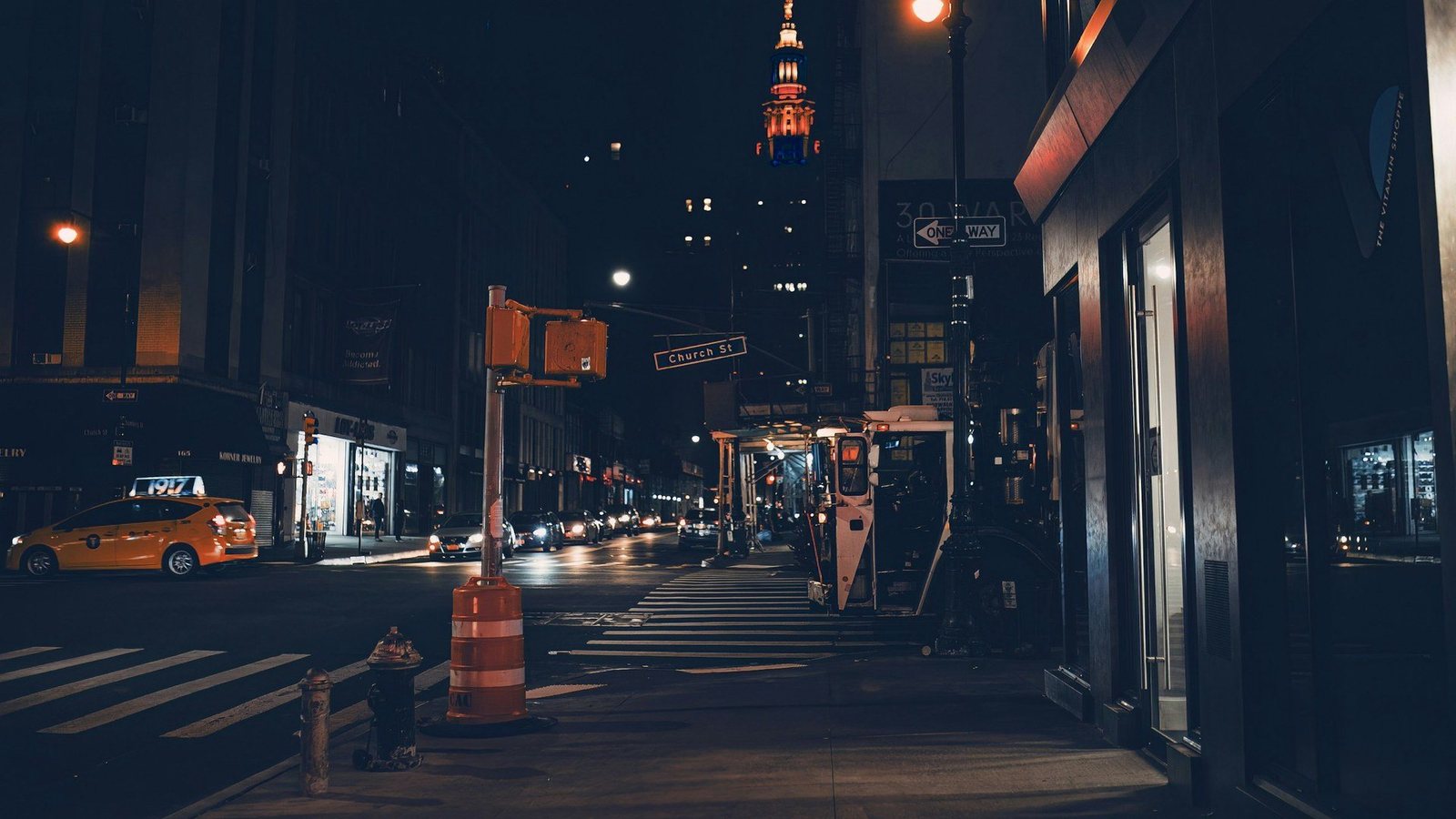
After Sunday's clock change, sunset in New York lands before 5 p.m. for much of the season. Photo: Elric Pxl / Unsplash.
On Sunday morning, New York gets a gift that does not feel like one for long. At 2 a.m. on Nov. 1, the clocks go back to 1 a.m. You get an extra hour of sleep. Then, starting Sunday evening, the sun sets about an hour earlier by the clock, and for the next few months a lot of us will be leaving work, the gym or class in the dark.
The extra hour is the easy part. The darkness is where people get caught slipping.
What actually changes on Sunday
Nothing about the sun changes. The clock does. According to the Old Farmer's Almanac, daylight saving time ends at 2 a.m. local time on the first Sunday in November, the 1 a.m. hour happens twice, and sunrise and sunset both land about an hour earlier on the clock. You get brighter mornings and earlier nights.
The Sleep Foundation says the fall change is far less disruptive than the spring one, when one study found people lose about 40 minutes of sleep on the Monday after clocks jump forward. Most people adjust to either switch within a few days to a few weeks. But the foundation also notes that some people never fully adapt, and that researchers have tied the weeks around both clock changes to more mood problems, more traffic accidents and higher suicide risk.
So the fall shift is not a crisis. It is a checkpoint. It is the moment your routine either adjusts to the dark months or quietly falls apart.
The fight over the clock itself
You may have heard this was supposed to be the last time change. Not yet.
On July 14, the U.S. House passed the Sunshine Protection Act, which would make daylight saving time permanent, according to FOX 29. The bill went to the Senate Commerce Committee, which had not scheduled a vote, and it would have needed to pass the Senate and be signed by Nov. 1 to stop this weekend's switch. President Trump has said he supports it. As of this week, the Senate has not acted, so the clocks fall back as usual.
Here is the twist many people miss. Most sleep scientists agree that we should stop switching. They just want the opposite permanent setting. The American Academy of Sleep Medicine says year-round standard time, the time we return to on Sunday, lines up better with the body's internal clock because it syncs us more closely with sunrise and sunset. The Society for Research on Biological Rhythms, the National Sleep Foundation, the Sleep Research Society and the American Medical Association have taken similar positions, according to the AASM. Dr. M. Adeel Rishi, lead author of the academy's position statement, put it bluntly: "Permanent standard time is the optimal choice for health and safety."
Supporters of permanent daylight saving time make their own case. The Sleep Foundation summarizes it: more evening daylight for after-work activity, possible energy savings, and research suggesting less crime and fewer car accidents. Reasonable people land in different places. But on the narrow question of sleep health, the sleep medicine groups are mostly on one side.
When it is more than a rough week
For some New Yorkers, the shorter days bring more than grogginess. Seasonal affective disorder, or SAD, is a form of depression that comes back with the seasons. The National Institute of Mental Health says the winter pattern usually starts in late fall or early winter and lifts in spring, with symptoms that can last four to five months.
NIMH says it is more common in women than men, usually begins in young adulthood, and shows up more often in people who live farther north with shorter winter days. The agency's own example: SAD is more likely in New England than in Florida. New York sits a lot closer to New England than to Miami. Beyond the classic signs of depression, winter-pattern SAD can bring oversleeping, carb cravings, weight gain and pulling away from people.
The treatments with the strongest support, per NIMH:
- Light therapy. A 10,000 lux light box, about 20 times brighter than normal indoor light, used for 30 to 45 minutes a day, usually in the morning, from fall into spring.
- Talk therapy. A version of cognitive behavioral therapy built for SAD worked about as well as light therapy in research, and its benefits seemed to last longer in one long-term study.
- Medication. Antidepressants can help, and one extended-release option is FDA-approved to prevent seasonal episodes.
- Vitamin D. Popular, but NIMH calls the evidence mixed and inconclusive.
If the winter blues start to feel like something heavier, that is a reason to talk to a doctor or therapist, not to tough it out. And if you or someone you love is in crisis, call or text 988.
What actually helps this week
Skip the hacks. The basics, from the Sleep Foundation, are boring and they work:
- Get morning light. Outdoor daylight, especially early, helps reset your body clock. After Sunday, mornings are brighter. Use them. A walk to the train instead of the bus counts.
- Keep your wake-up time steady, weekends included.
- Cut caffeine in the afternoon and evening.
- Skip alcohol before bed. It wrecks sleep quality.
- Keep naps to 20 minutes or less.
- Melatonin may help, but only with a doctor's guidance.
And give yourself enough runway. The CDC, citing the AASM and Sleep Research Society, says adults 18 to 60 need at least seven hours a night, and more than a third of American adults regularly fall short. The same CDC data found that only 54% of non-Hispanic Black adults hit seven hours, compared with 66% of Hispanic adults and 67% of non-Hispanic white adults. That data is from 2014, but the gap is a reminder that sleep is not just personal discipline. Shift work, long commutes and loud, crowded buildings all play a part.
The Den's take
From where we sit in Harlem, the hustle culture of this city treats sleep like a weakness. It is not. It is the base layer under everything else: your workouts, your mood, your patience with your kids, your focus on the job.
Sunday is a free reset. Use the extra hour to set the routine you want to carry through March. Get outside in the morning. Protect your bedtime. Check on the people around you who go quiet in winter. The dark months come every year in New York. How we move through them is the part we control.
This story is for general information, not medical advice. Talk to a health professional about your own sleep or mood.
Your turn
What is your go-to move to keep your energy up when it is dark by 5 p.m.? Tell us in the comments.
Follow @theinnovatorsden.
Sources: Old Farmer's Almanac · Sleep Foundation · Sleep Foundation: reset · FOX 29 · AASM · NIMH · CDC