
Six Feet. 165 Pounds. All Heart. Why Allen Iverson Still Matters.
He was too small by everybody's measuring tape and played bigger than everybody on the floor. For a generation of hoopers, including the Den's founder, No. 3 is the reason they fell in love with the game.
He was too small by everybody's measuring tape and played bigger than everybody on the floor. For a generation of hoopers, including the Den's founder, No. 3 is the reason they fell in love with the game.
Where it started
Every hooper has a name. The player you copied in the driveway, the one whose moves you practiced until the streetlights came on. For Den founder Danny Silverio, that name has always been Allen Iverson.
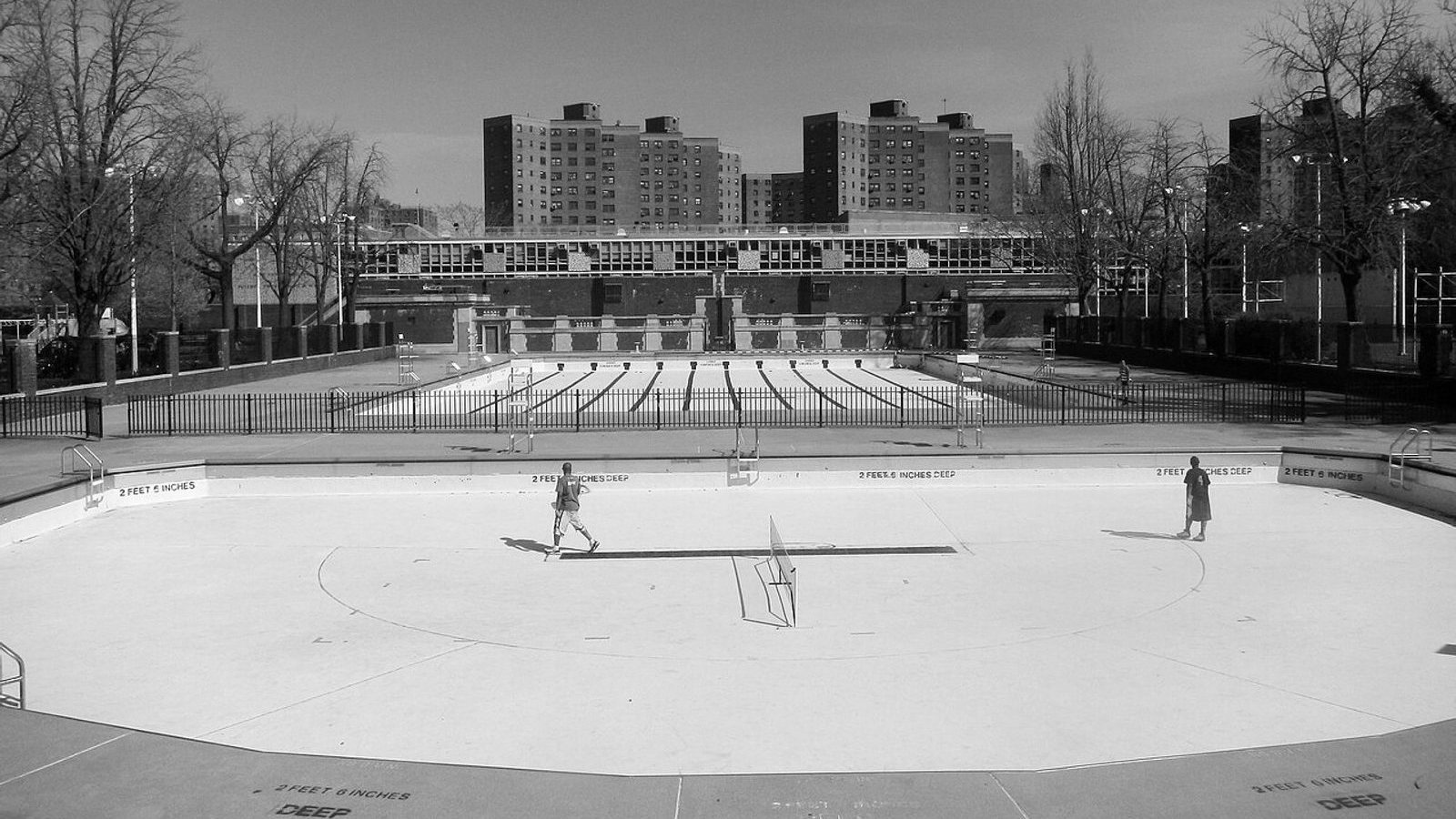
It was 1998. Danny would spend summers and weekends with his aunt and his cousin, Francisco Reynoso Jr., running the courts at Hamilton Fish Park and Forsyth on the Lower East Side. Basketball ran in that family: Francisco's father played for the Dominican Republic's national team and went on to coach a long list of well-known players.
Danny was the little one out there. That is exactly why Iverson made sense to him.
"Allen Iverson is the reason I love the game of basketball. Every time I touched the ball, I was trying to be A.I." Danny Silverio, founder, The Innovators Den
Too small, by their measuring tape
Iverson was listed at 6 feet and 165 pounds in a league built for giants. The Philadelphia 76ers took him first overall in 1996 anyway, making him the shortest No. 1 pick the league had ever seen, and he was named Rookie of the Year.
In 2000-01 he averaged 31.1 points and 2.5 steals a night, won the scoring title, carried an undersized Sixers team to the NBA Finals and was named MVP with 93 of 124 first-place votes. He remains the shortest and lightest MVP in league history. That same season, after he won All-Star Game MVP, Commissioner David Stern joked with him that great basketball can come in very small packages.
- 4x NBA scoring champion.
- 11x NBA All-Star.
- 31.1 points per game, 2001 MVP season.
- 2016 Hall of Fame.
What the numbers don't show is the cost. He threw that 165-pound frame into the paint night after night, got knocked to the floor by men a foot taller, and got right back up.
The crossover
On March 12, 1997, in his first head-to-head meeting with Michael Jordan, a rookie stood at the top of the key, shook once to set him up and crossed him anyway. The clip has been replayed for nearly three decades because of what it said: Iverson respected the giant. He just refused to fear him.
"We talkin' about practice"
In 2002, after a playoff exit, Iverson gave a press conference that the world turned into a punchline. Listen again and you hear something else: a man who refused to perform for anybody. The cornrows, the tattoos, the chains, the honesty. He never shrank himself to make a room comfortable, and the league's culture changed around him.
Years later, Dwyane Wade put it simply when he told Iverson that he is the culture.
Counted out at 17
Before any of it, life tried to end his story. As a high school star in Hampton, Virginia, Iverson was convicted at 17 after a 1993 bowling alley brawl and sent to jail. He served about four months before Virginia's governor granted him clemency, and the conviction was later overturned on appeal for insufficient evidence. The case is the subject of the documentary No Crossover: The Trial of Allen Iverson.
Georgetown coach John Thompson gave him a shot when others would not. At his Hall of Fame enshrinement, Iverson thanked Thompson for saving his life.
The Hall, and the signs
On September 9, 2016, in Springfield, Massachusetts, Iverson gave a 31-minute speech that drew multiple standing ovations and an "MVP" chant from Sixers fans in the balcony. He thanked family, coaches, teammates and the rappers he called the theme music of his career. Then he closed with something few inductees would say out loud: a word for the people who were no longer his friends.
"So if I make any more new friends, I know the signs." Allen Iverson, Hall of Fame enshrinement, 2016
It is one of the most honest lines ever spoken at that podium. Betrayal, in Iverson's telling, is not the end of the story. It is information.
You can see him in the stars who came after
Iverson's fingerprints are all over the generation that followed. LeBron James has said A.I. was his second-favorite player growing up, right behind Michael Jordan, and that the one thing he took from him was his will.
Dwyane Wade wore No. 3 in college and in the NBA as a sign of respect, wore an arm sleeve throughout his career because Iverson did, and chose Iverson to present him at the Hall of Fame.
Carmelo Anthony, who played alongside Iverson in Denver, has said Iverson impacted his whole professional career. When Melo was enshrined with the Class of 2025, he chose Iverson and Wade as his presenters.
What No. 3 taught a kid from the South Bronx
Danny is Dominican-born and Bronx-raised. Long before he built a media company, he was the smallest player on a Lower East Side court, studying a 6-foot guard from Hampton. The lessons stuck:
1. Your size is not your ceiling.
2. Be yourself in rooms that weren't built for you.
3. Fear nobody. Respect everybody.
4. The people who leave are showing you the signs.
5. Get up. Every single time.
"His relentless way of not quitting, even when life thought he was down and out, has inspired me in so many ways. I'll always thank him for that." Danny Silverio
Your turn
Who made you fall in love with the game? Tell us at @theinnovatorsden.
Sources: NBA.com, "Legendary Moments in NBA History: Allen Iverson wins MVP in 2001"; ESPN, coverage of the 2016 Hall of Fame enshrinement and the 2001 All-Star Game; Rev, transcript of Iverson's 2016 Hall of Fame speech; NBC Sports Philadelphia; The Philadelphia Inquirer; ESPN, "LeBron James: two role models"; Sports Illustrated, Wade on Iverson; CBS Sports and NBC Sports, Carmelo Anthony's Hall of Fame presenters.
For us. By us. Follow @theinnovatorsden.