
NYC Small Businesses Get a Fine Reset Right Before the Holiday Rush
City Hall's Debt Demolisher window runs to Jan. 10 as owners head into a record holiday season with tariffs, price pushback and pricier credit.
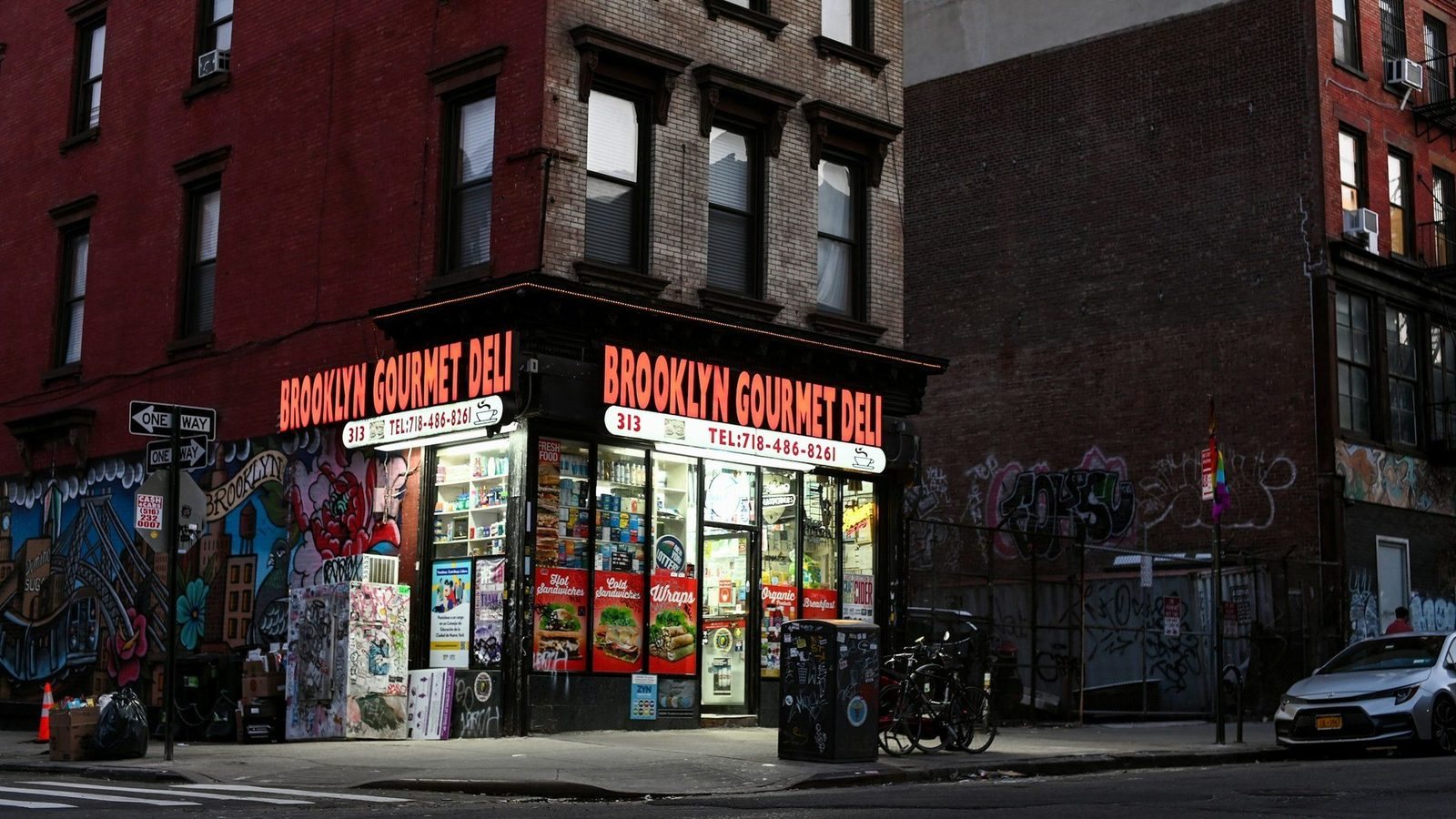
Neighborhood shops head into the holiday rush with a 10-week window to clear old city fines. Photo: Robinson Greig / Unsplash.
Every small business owner in this city has a drawer. You know the one. Somewhere under the receipts and the vendor invoices sits a violation from Sanitation, a summons from Buildings, a notice you meant to deal with two winters ago. It did not go away. It grew interest.
For the next ten weeks, New York City is offering a way to empty that drawer at a discount. And the timing matters, because the most important sales stretch of the year is about to start.
What Debt Demolisher actually is
On October 13, Mayor Zohran Mamdani and Department of Finance Commissioner Richard Lee announced Debt Demolisher, a 90-day relief window that runs through January 10, 2027. It covers outstanding Environmental Control Board judgments, the debt that piles up when violations from agencies like Sanitation, Buildings and Transportation go unpaid.
The deal, per the city's announcement: accrued interest is waived and eligible debt can be settled at a reduced cost. NY1 reported the specifics. If you were found liable at an OATH hearing, you pay 75 percent of the fine and the interest disappears. If you never showed up and got a default judgment, you pay the base fine, and the default penalty plus interest are waived. Some trade outlets have described the savings as up to 75 percent off, so read your own judgment carefully before you assume a number.
Not everything qualifies. Judgments docketed after July 15, 2026 are out. So are judgments already with the Sheriff or a City Marshal, ones converted to a tax lien, ones tied to a criminal investigation, and penalties that came from a citizen complaint like idling or noise. There is also a catch: you have to come into compliance with the underlying violation, not just pay.
You can check eligibility at nyc.gov/debtdemolisher, by calling 311, at a DOF Business Center, or through the NYC Business Express Service Team at Small Business Services. Mamdani framed it plainly: "City government shouldn't saddle New Yorkers with endless fines and interest."
The fine print owners should know
Here is where the real world shows up. CRE Daily reported that for some judgments, owners must both pay and fix the violation, and the Department of Buildings has to certify that fix first. An expediter at the Mark Hertz Group told the outlet that certification usually takes a month or more, and she expects delays to grow. The firm also said it learned about the program the morning it launched, with no advance notice from the city.
Translation: if your violation needs a repair and a sign-off, do not wait until December. Ten weeks goes fast when one step depends on an agency calendar.
The city has its own reasons to want this to work. It projects the program will bring in $25 million that might otherwise go uncollected. CRE Daily cited Commissioner Lee's August testimony putting unpaid ECB fines at $573 million entering fiscal 2026, and noted that a 2021 amnesty brought in more than $43 million, according to Council Majority Leader Shaun Abreu. Supporters see relief for owners. Skeptics see a collections push dressed as a favor. Both can be true at once, and the math is still worth running for your own business.
The Bill of Rights nobody got
Debt Demolisher sits inside a bigger effort. In July, the mayor issued Executive Order 18 creating a revised Business Owner Bill of Rights. It covers your rights during city inspections, plain-language explanations of violations and how to appeal them, multilingual information and interpretation, and free compliance consultations through SBS that can help owners avoid paying an expediter.
The detail that jumped out at us came from the Bronx Times, which reported on October 22 that fewer than 9 percent of business owners surveyed by SBS said they had received the previous version of the Bill of Rights. That is the whole problem with small business policy in this city, summed up in one number. Help exists. It just never reaches the counter. Since October 1, inspectors are supposed to hand brick-and-mortar businesses and street vendors a physical copy at the start of every inspection. If an inspector shows up and you do not get one, now you know to ask.
The holiday math just changed
Why does a fine amnesty matter in late October? Because the holiday season is when a lot of small shops make or break the year, and nobody wants a city judgment or a tax lien hanging over the busiest weeks.
The numbers look strong on paper. Intuit QuickBooks surveyed 6,000 consumers and 1,002 small business owners in August. Shoppers plan to spend $278 billion this holiday season and expect about 43 percent of that to go to small businesses, roughly $118 billion. Seventy-six percent of owners expect to make more than last year.
But dig one layer down and the pressure is real. Sixty-four percent of owners said tariffs had a significant impact on them. Among the 48 percent who stocked up early, 36 percent are now restocking at noticeably higher prices. Thirty-eight percent have raised or plan to raise prices. And shoppers are watching: only 9 percent think those price increases are fully justified.
Then there is money itself. On October 28 the Federal Reserve held its benchmark rate at 3.75 to 4 percent, but two officials dissented in favor of a hike, and Yahoo Finance reported bond traders putting the odds of a December increase around 85 percent. For a shop that runs inventory on a credit line or a card, that is not abstract.
The Den's take
From where we sit in Harlem, the businesses that survive this city are rarely the flashiest. They are the ones that keep their paperwork clean, know their margins, and move before the deadline instead of after it.
So here is our playbook for the next ten weeks. Pull the drawer. Check every ECB judgment against the Debt Demolisher rules this week, not next month, especially anything that needs a repair certified. Book a free SBS compliance consultation before you pay an expediter. Be honest with customers if prices went up, because the survey is clear that shoppers notice and they talk. And take the AI piece seriously: QuickBooks found 46 percent of small businesses have already worked to show up in AI-powered search and shopping tools. If your competitors are findable by a chatbot and you are not, that is lost foot traffic you will never see.
None of this is glamorous. But clearing old debt at a discount before your best sales month is the kind of quiet move that builds a business that lasts.
This is general information, not legal or tax advice. For your specific judgments, talk to SBS, DOF or a qualified professional.
Your turn
Owners, real talk: is there a city fine sitting in your drawer right now, and will Debt Demolisher get you to finally deal with it?
Follow @theinnovatorsden.
Sources: NYC Mayor's Office · NY1 · 6sqft · CRE Daily · Bronx Times · Intuit QuickBooks survey · Stacker via KVIA · Yahoo Finance · Federal Reserve