Hidden Harlem: Kitchens With Something to Prove
Harlem doesn't reward empty concepts. The places that last here, even quietly, are the ones where the kitchen means something: eight restaurants, eight answers to eight different questions about food and identity.
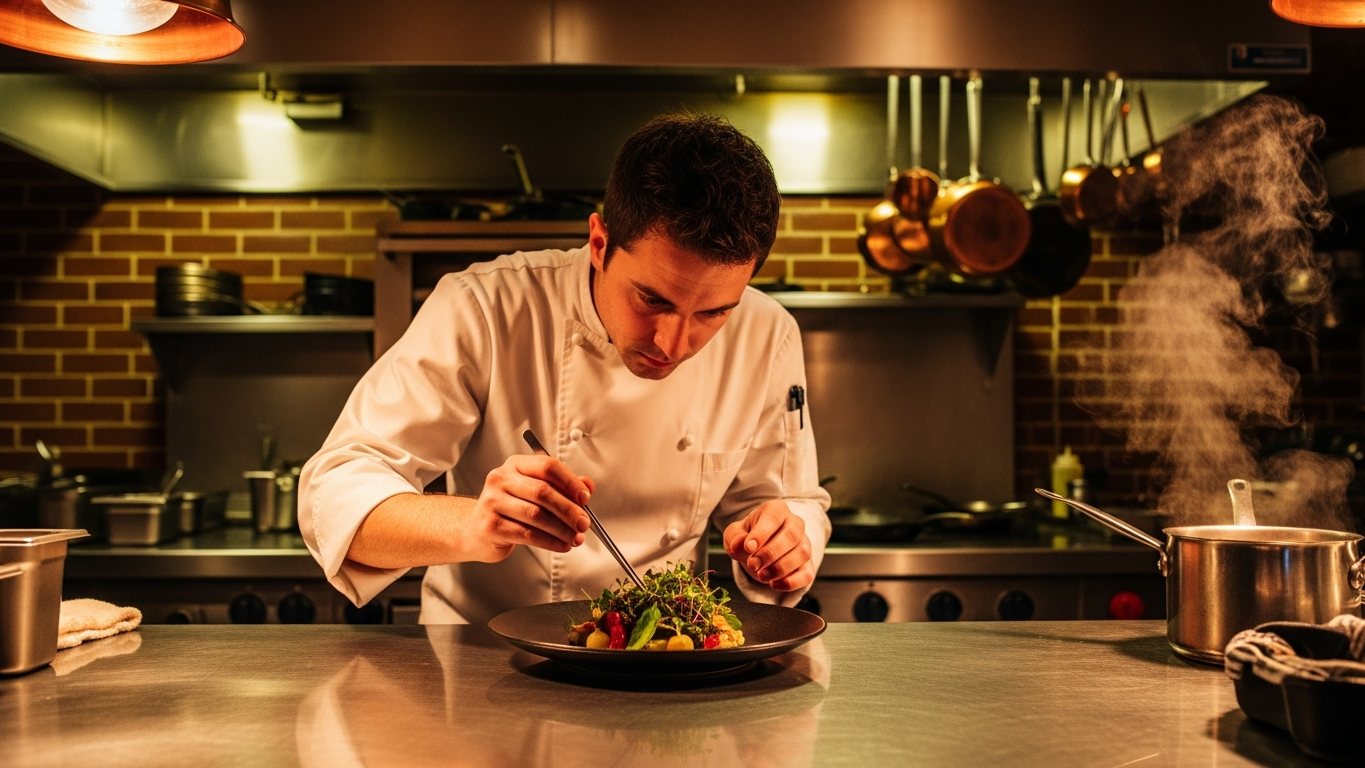
Harlem doesn't reward empty concepts.
You can design a beautiful room. You can build a brand. You can even get attention for a moment.
But if the food doesn't carry weight (history, discipline, technique, identity), the neighborhood will expose it quickly.
The places that last here, even quietly, are the ones where the kitchen means something.
The Good Good
Chef energy: Diaspora-driven, culturally fluent, modern without dilution
At The Good Good, the menu reads like a conversation between islands and city blocks.
Caribbean influence is the foundation, but it's not locked into tradition; it moves. Jerk doesn't just sit on the plate; it's reinterpreted, balanced, sometimes restrained in ways that show technical control rather than excess. You'll find dishes that layer sweet heat, citrus brightness, and smoke without letting any one element dominate.
This is not food trying to prove authenticity.
It's food that assumes it already has it.
Small plates encourage movement: across flavors, across the table. A tamarind glaze lands differently than expected. A plantain component might show up less as starch, more as structure. Proteins are treated with precision, not just seasoning.
The chef's voice here is clear:
Respect the origin. Refine the delivery.
Clay Harlem
Chef approach: Seasonal discipline, American technique, ingredient-first
Clay operates like a kitchen that trusts its sourcing more than its storytelling.
Menus shift with availability, not trend cycles. That means a dish only appears when it can be done properly, when the ingredient carries enough flavor to justify simplicity.
A roasted chicken here is not just roasted chicken. It's about skin rendered to exact crispness, meat held at moisture, seasoning that doesn't compete but completes. Vegetables are treated with equal seriousness: char, acid, salt, timing.
There's restraint in this kitchen.
And restraint is harder than excess.
The chef's philosophy is quiet but firm:
If the ingredient is right, don't interfere.
Lido Harlem
Chef identity: Italian technique filtered through New York consistency
Lido's strength is not innovation. It's reliability executed at a high level.
The pasta program carries the kitchen. You see it in the texture: proper bite, not overworked. Sauces that cling without drowning. A balance between richness and structure that shows the kitchen understands restraint.
Dishes like rigatoni with sausage or a well-built seafood pasta don't try to surprise you. They aim to satisfy you completely.
This is a chef who understands repetition as discipline.
Doing the same thing well, over and over, until it becomes trusted.
That trust is the product.
Archer & Goat
Chef voice: Personal, global, experimental without chaos
This is one of the few Harlem kitchens where you can feel the chef thinking in real time.
The menu shifts not just seasonally, but conceptually. You might see Southeast Asian influence one night, Mediterranean structure the next, but it never feels random. There's a throughline of curiosity backed by technical control.
Dishes are composed with intent. Acid is placed deliberately. Heat is layered, not dumped. Textures contrast in ways that feel studied.
This is not fusion for the sake of novelty.
It's exploration with accountability.
The chef here is asking:
What can these ingredients do together if I take them seriously?
Bixi Harlem
Chef direction: High-energy fusion, built for both plate and room
Bixi walks a difficult line: it has to serve the room and the food.
The menu leans into Asian and Latin crossover (bao, skewers, rice dishes), but with enough structure to avoid feeling like a collage. Flavors are bold, built to stand up to music, movement, alcohol, conversation.
This is food designed for a social environment.
That doesn't make it lesser; it makes it intentional.
A good Bixi dish hits fast, clean, memorable. It doesn't require silence to be appreciated. It cuts through noise.
The kitchen understands its assignment:
Flavor that holds up in motion.
The Edge Harlem
Chef foundation: Caribbean tradition, no compromise
At The Edge, the food is not interpreted.
It is delivered.
This is a kitchen built on memory and muscle. Seasoning is layered the way it's supposed to be: time, heat, patience. Dishes like oxtail, jerk chicken, or curry aren't adjusted for presentation trends. They are built for depth.
Gravy matters here. Texture matters. Portion matters.
Nothing is accidental.
The chef isn't trying to modernize Caribbean food.
They're protecting it.
And that protection is what gives the food its authority.
Maison Harlem
Chef discipline: Classical French technique in a neighborhood setting
Maison Harlem works because it doesn't overextend.
French cuisine demands precision (timing, reduction, balance), and this kitchen stays within that discipline. Sauces are constructed, not improvised. Proteins are treated with exactness. The menu remains focused because it has to.
What makes it Harlem is not the cuisine; it's the restraint in how it's presented.
No excess formality. No distance from the guest.
Just technique, translated into a smaller, more human room.
The chef's belief is clear:
Technique doesn't need spectacle. It needs control.
Teranga
Chef vision: West African cuisine, modern system, cultural clarity
Teranga is one of the most important kitchens conceptually.
It takes West African food (often underrepresented or misunderstood) and places it into a clean, accessible structure without removing its identity.
Grains, stews, vegetables, sauces, all rooted in traditional flavors, but organized in a way that fits modern eating habits. Fast-casual, yes. But not diluted.
The chef here is doing something strategic:
Expanding access without sacrificing meaning.
And that matters.
What separates these kitchens
It's not just flavor.
It's intention.
Each of these places answers a different question:
- How do you evolve culture without losing it? (The Good Good)
- How do you respect ingredients without overworking them? (Clay)
- How do you earn trust through repetition? (Lido)
- How do you experiment without losing control? (Archer & Goat)
- How do you serve energy as much as food? (Bixi)
- How do you protect tradition? (The Edge)
- How do you apply discipline quietly? (Maison Harlem)
- How do you scale culture responsibly? (Teranga)
In Harlem, the best kitchens don't just feed you.
They show you what they believe.