After the Rise That Didn't Come
Before the pandemic, East Harlem was being described as a neighborhood in motion. Then the pandemic arrived and stripped the narrative down to what could survive without it.
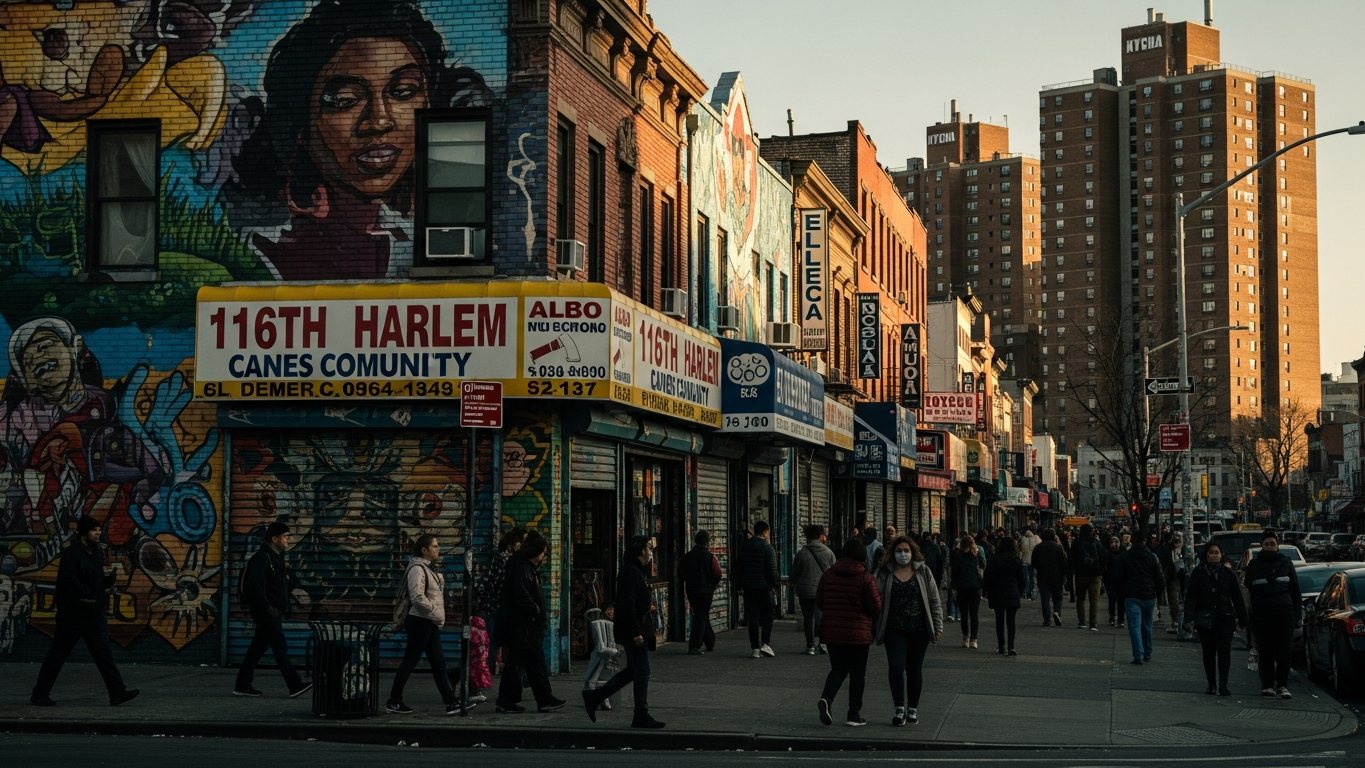
Before the pandemic, East Harlem was being described as a neighborhood in motion.
Not perfect. Not finished. But moving.
City plans outlined investment, housing, resiliency. Meetings were held. Reports were printed. The language was careful but optimistic: growth, access, affordability, improvement. The kind of language that suggests a place has been seen and is finally being taken seriously.
On the ground, that translated into small, visible signals. Construction scaffolding. Fresh paint on buildings that had gone years without it. New businesses testing the edges of older blocks. The feeling (not certainty, but feeling) that something was trying to turn.
Then the pandemic arrived and stripped the narrative down to what could survive without it.
The streets emptied first.
What followed was not just illness, but exposure. Systems that had always been strained (housing, healthcare, addiction services) were pushed into the open. What had been managed quietly became visible, then unavoidable.
By 2020, overdose deaths in New York City surged past 2,100. By 2021, they climbed to nearly 2,700, the highest number ever recorded in the city. The crisis did not disappear after that peak. It settled into the background, constant enough to feel permanent, visible enough to reshape daily life.
East Harlem, already carrying high poverty rates and long-standing public health disparities, absorbed that pressure directly.
At the same time, homelessness shifted in a way that was harder to interpret but impossible to ignore.
Shelter populations initially dropped during the early pandemic years, buffered by eviction protections and emergency policies. But the stability was temporary. As those protections ended and new migration pressures increased, the city's shelter system expanded to historic levels: tens of thousands of additional people entering a system already stretched thin.
On the street, the change was less statistical and more immediate.
More people staying in one place longer.
More encampments forming and reforming.
More visible instability: mental health crises unfolding in public, not behind closed doors.
It was not simply that there were more people without housing. It was that the boundary between public space and private crisis had eroded.
East Harlem felt that erosion block by block.
In neighborhoods like this, where nearly a third of residents live below the poverty line, where rent burden is high, where public housing anchors entire sections of the community, the margin for disruption is thin. When systems fail, they do not fail quietly. They spill outward.
By 2022 and 2023, the streets had filled again, but differently than before.
Busy, but not stable.
Active, but not at ease.
There were more moments that forced attention. A person unresponsive on a bench. A confrontation that escalated faster than expected. A group of teenagers choosing a longer route home without explaining why. Store owners adjusting how long they keep their doors open, or how closely they watch the sidewalk.
These were not isolated incidents. They were patterns.
Law enforcement data tracked crime through precinct reporting, but numbers alone could not capture the shift residents described more simply: the feeling of unpredictability had increased.
Federal prosecutors would later describe organized narcotics activity operating in parts of East Harlem public housing as recently as 2022 through 2025: open-air dealing, firearms, sustained presence. For residents, that translated into something less formal but more immediate: certain corners becoming known again, not by designation, but by behavior.
The return of visibility.
That visibility matters.
Because one of the defining tensions in East Harlem's current reality is not just the presence of poverty, addiction, or homelessness. Those have long histories in the neighborhood. The tension is how visible, how constant, and how normalized those conditions have become in shared public space.
There is a difference between knowing a problem exists and encountering it daily.
The pandemic compressed that distance.
At the same time, the neighborhood did not collapse.
That is the other truth.
Families continued working. Children continued going to school. Churches distributed food. Clinics treated patients. Small businesses stayed open through conditions that would have closed others.
Life did not stop.
But it adjusted.
People moved differently. Stayed alert longer. Calculated risk in ordinary decisions: where to stand, when to pass, whether to engage. The informal knowledge that has always existed in city neighborhoods became sharper, more necessary.
This is where the conflict sits now.
Not between good and bad neighborhoods.
Not between past and present.
But between two realities existing at the same time:
A neighborhood that has received attention, planning, and promised investment.
And a neighborhood where residents navigate visible disorder, public health crises, and safety concerns in real time.
Both are true.
Neither cancels the other.
What has changed since the pandemic is not simply the scale of the problems, but their proximity.
The distance between policy and sidewalk has narrowed.
And in that space, on the sidewalk, at the corner, outside the subway entrance, is where the real version of East Harlem is now negotiated.
Not in reports.
Not in announcements.
But in what people see, what they accept, and what they can no longer ignore.